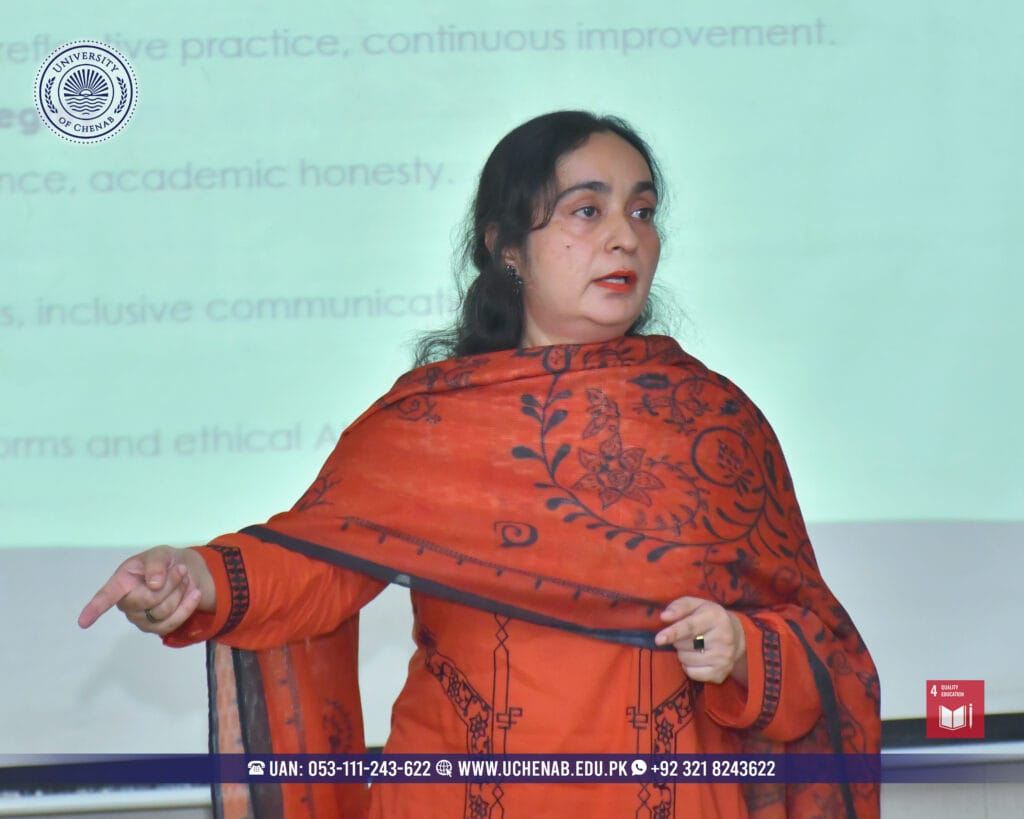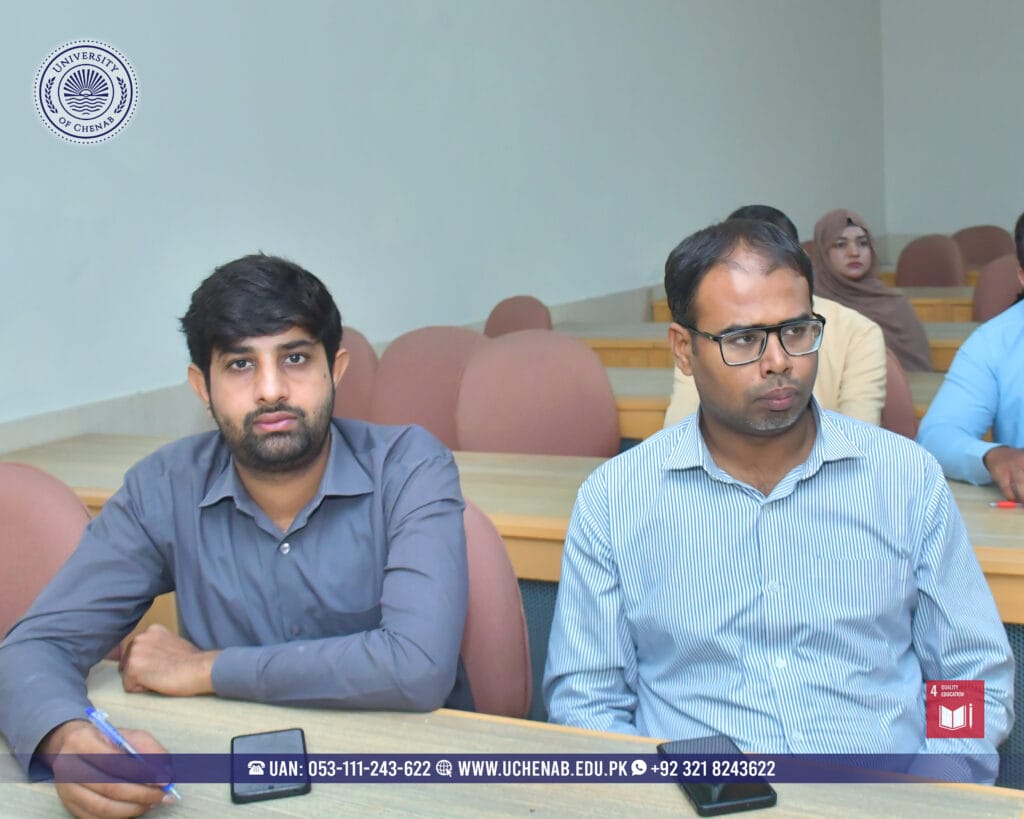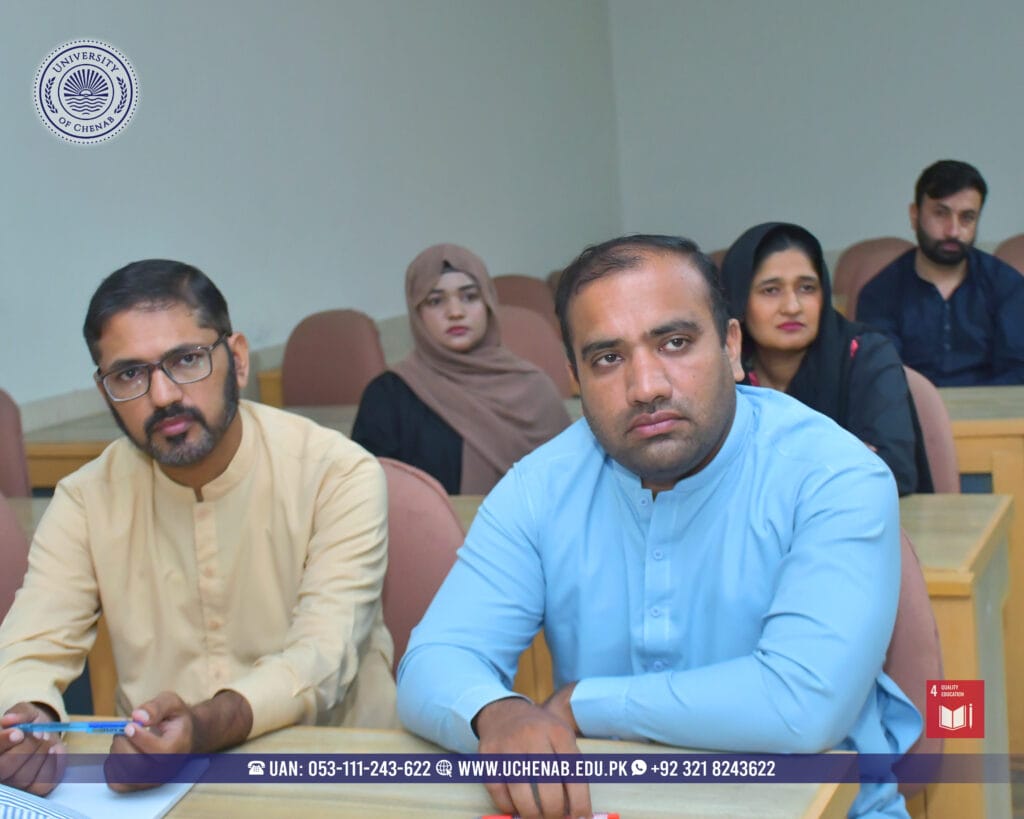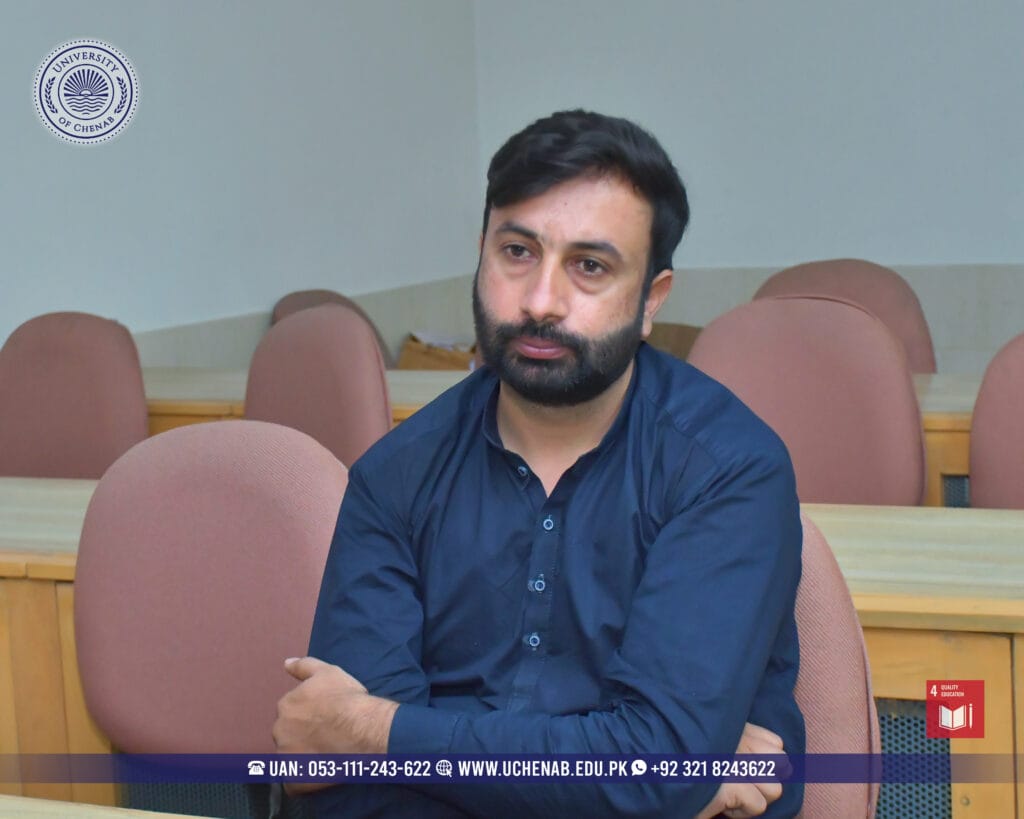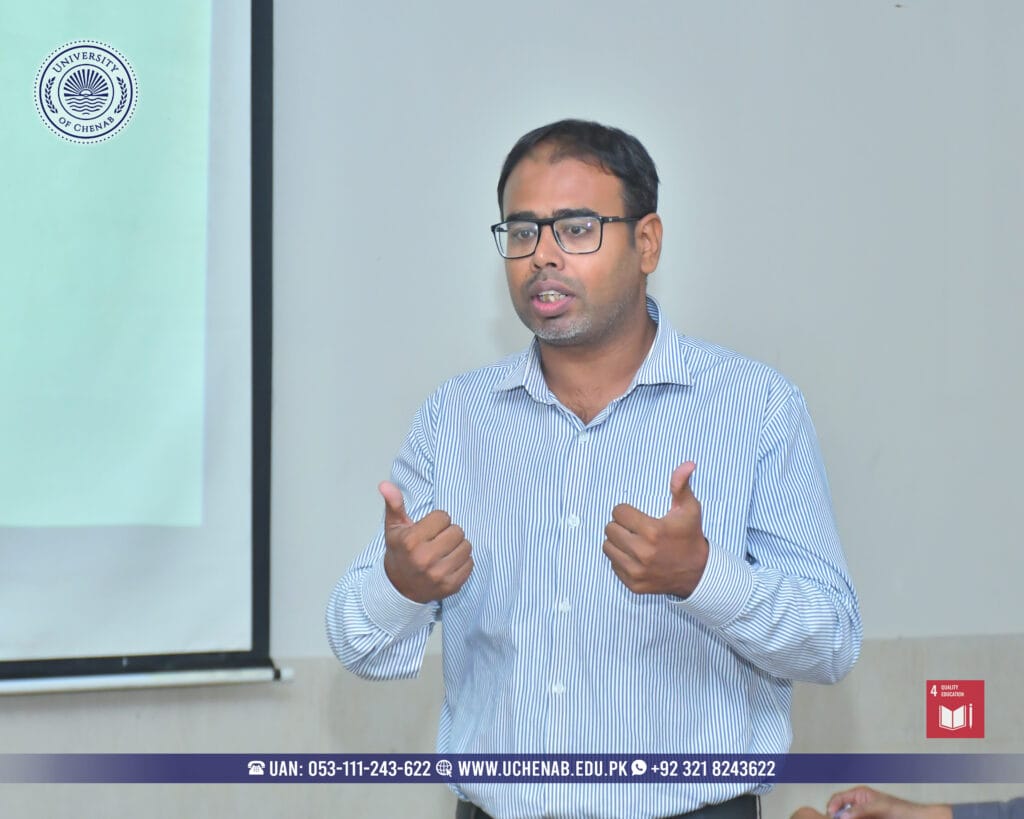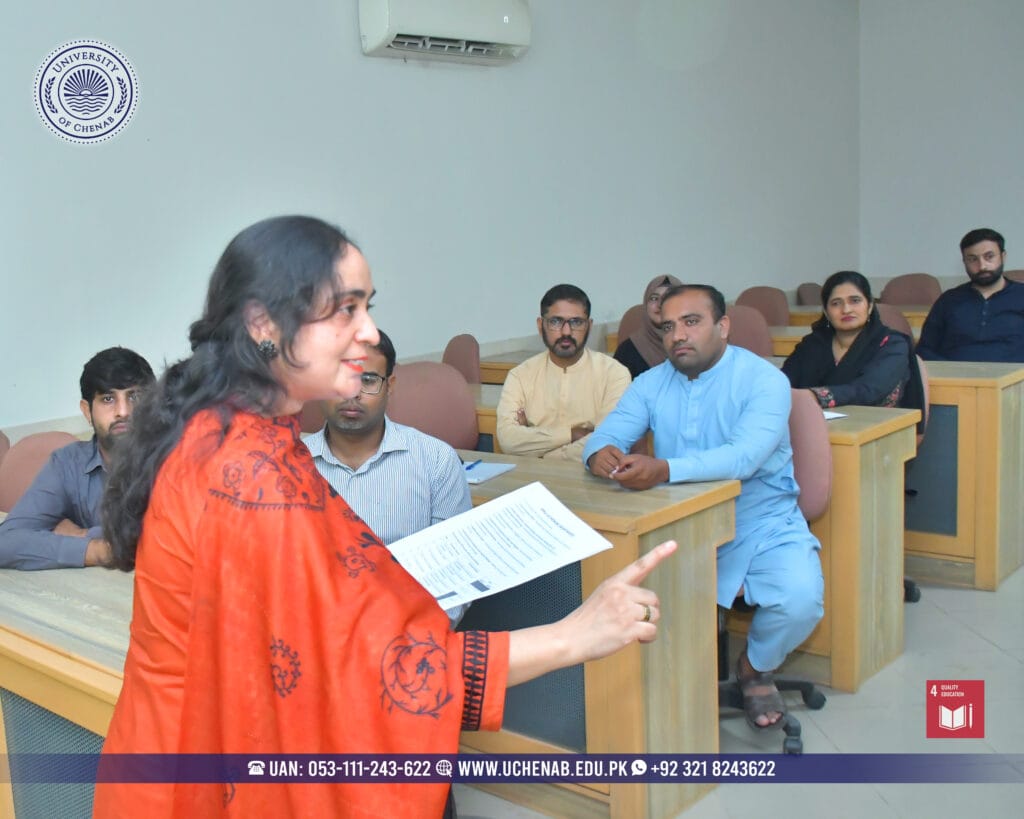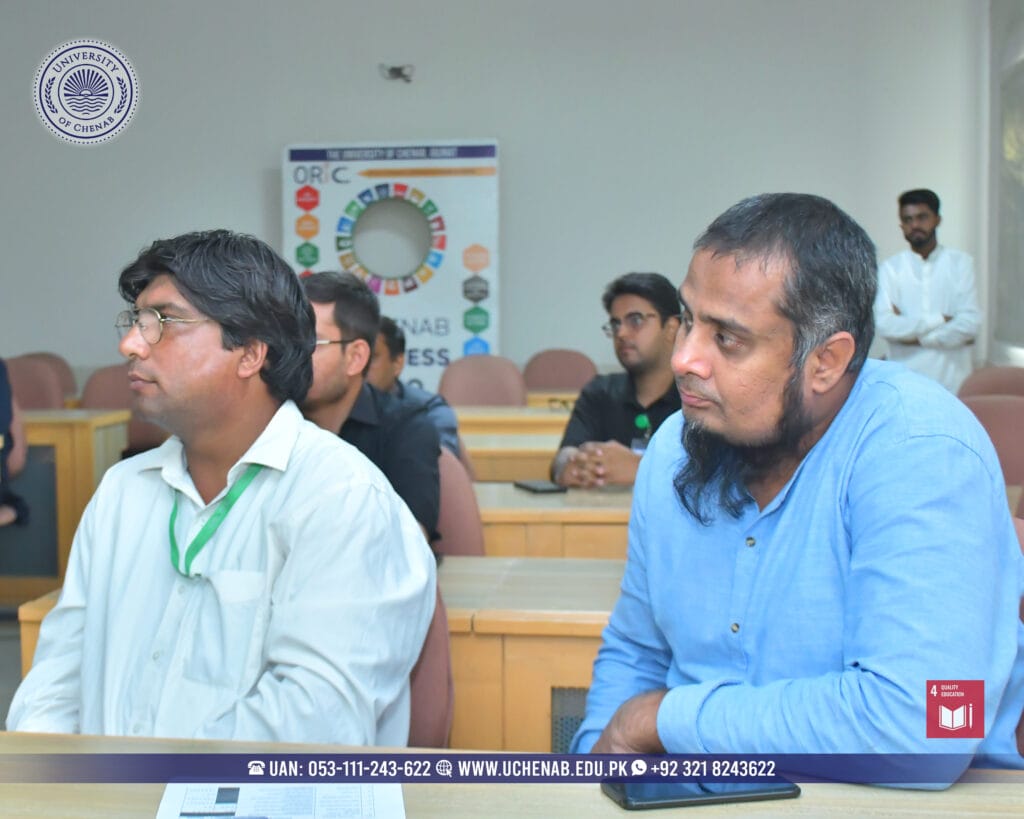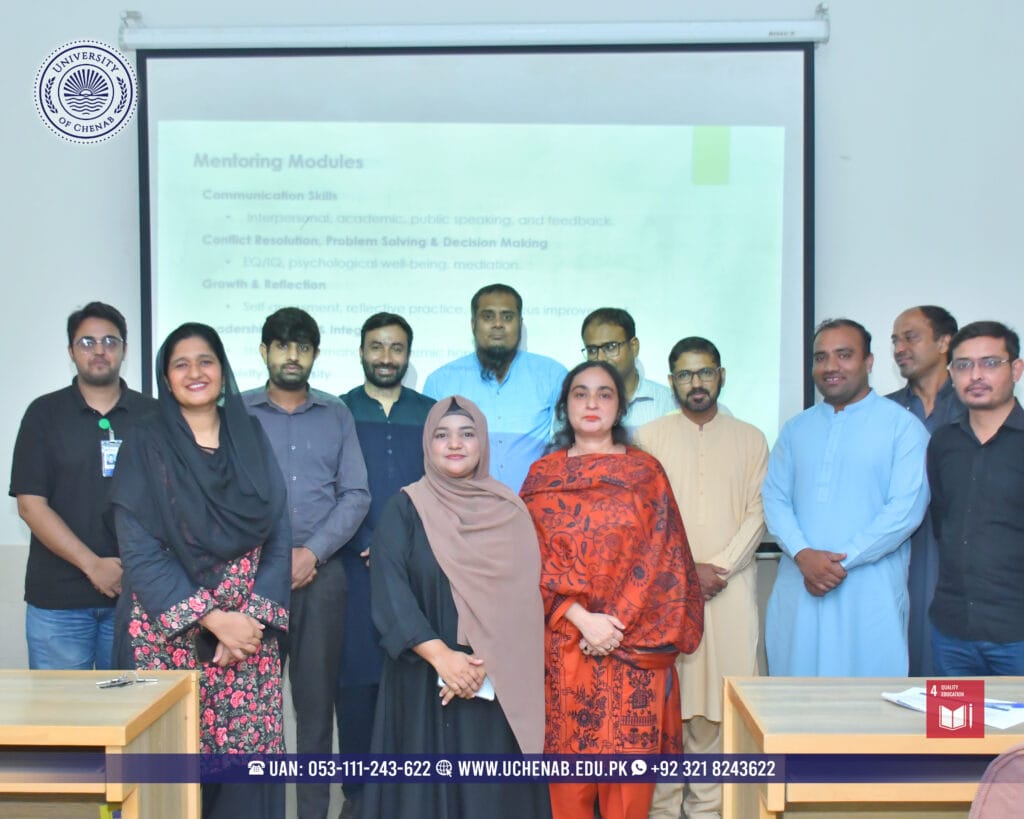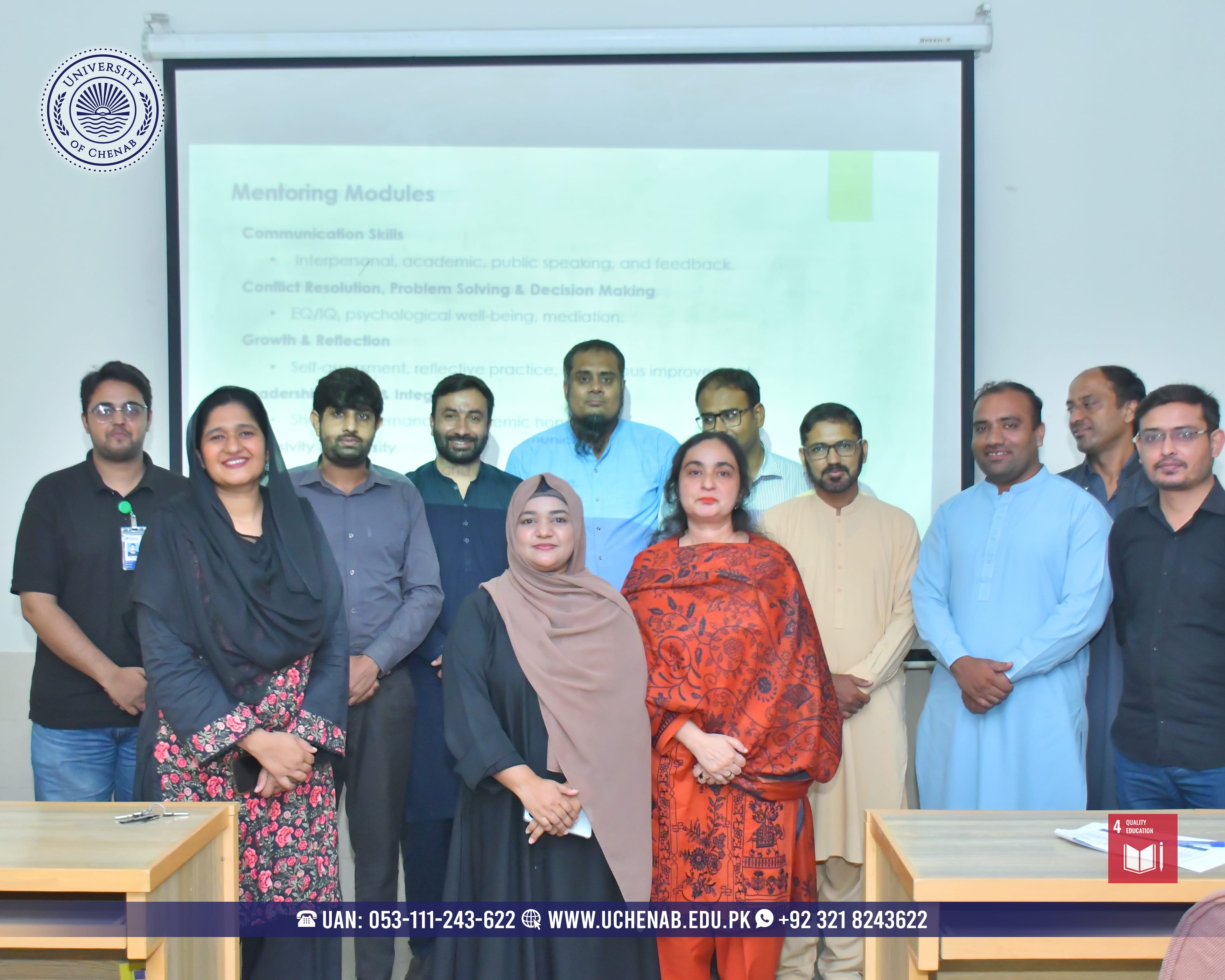
The University of Chenab hosts First Cohort Orientation highlights a step under the HEC-recommended Mentoring Program Unit (MPU). The University of Chenab convened its First Cohort Mentoring Program Orientation Session to equip faculty members with an understanding of the program’s vision and implementation plan. During the session, Prof. Dr. Ayesha Shabbir, Director ORIC, and Dr. Waqas Ahmad, Assistant Professor, Computer Science, delivered presentations. They shared best practices for developing impactful mentor-mentee relationships and supporting program success. Moreover, the speakers highlighted approaches that can strengthen mentoring practices.
Meanwhile, the UChenab-MPU team outlined its responsibilities and collaborative framework. Prof. Dr. Ayesha Shabbir serves as Chairperson, while Ms. Rubina Inam and Mr. Mirza Abu Bakr contribute as members. Additionally, ORIC administrative staff support the team, with Dr. Waqas Ahmad serving as Secretary. Together, these roles provide a coordinated foundation for the initiative. Throughout the orientation, faculty members gained insight into the program’s objectives and implementation process. Furthermore, the session encouraged engagement with mentoring principles and emphasized sustained professional guidance. Such structured mentorship can support faculty development while promoting stronger academic and professional relationships within the university community.
The initiative also reflects UChenab’s focus on continuous professional development for faculty and administrative staff. Consequently, the mentoring program can help participants strengthen their ability to lead, mentor, and contribute meaningfully to institutional growth. Collaborative learning can further support a culture of professional improvement. Finally, the First Cohort Mentoring Program Orientation reinforced UChenab’s commitment to developing academic professionals. Through the HEC-recommended MPU framework, the university continues to support structured mentorship, professional growth, and institutional development. This initiative further strengthens the university’s efforts to create an environment where leadership, guidance, and meaningful contribution remain central to continued progress.