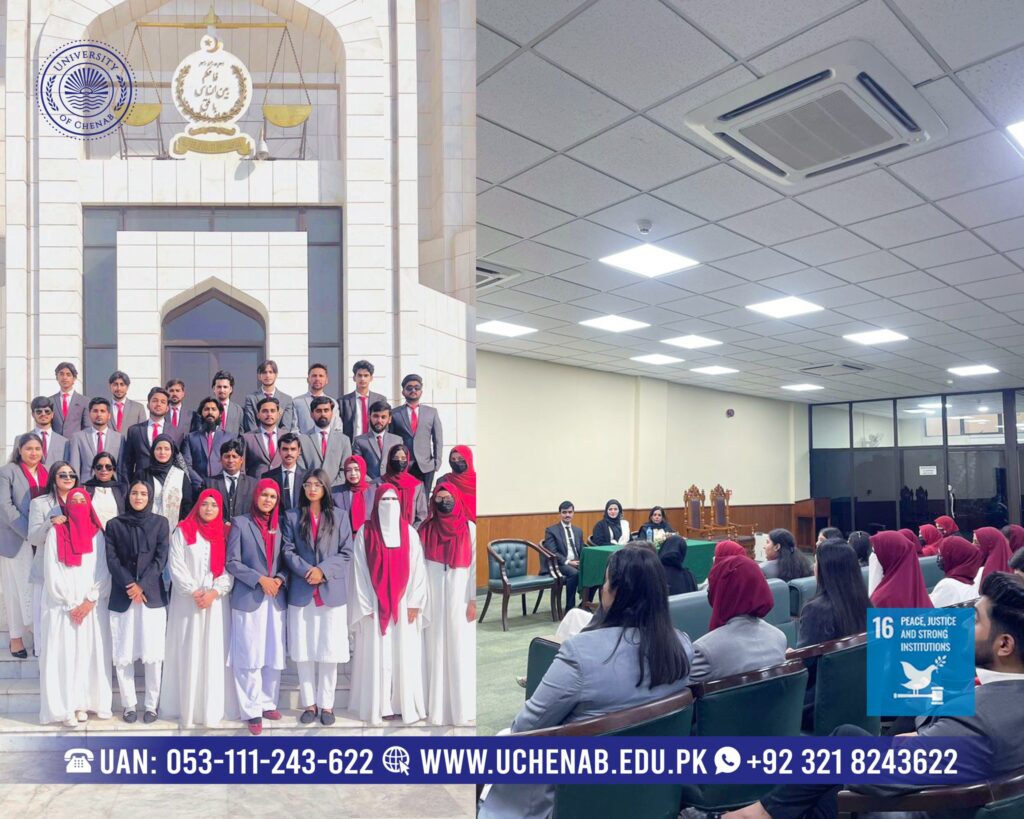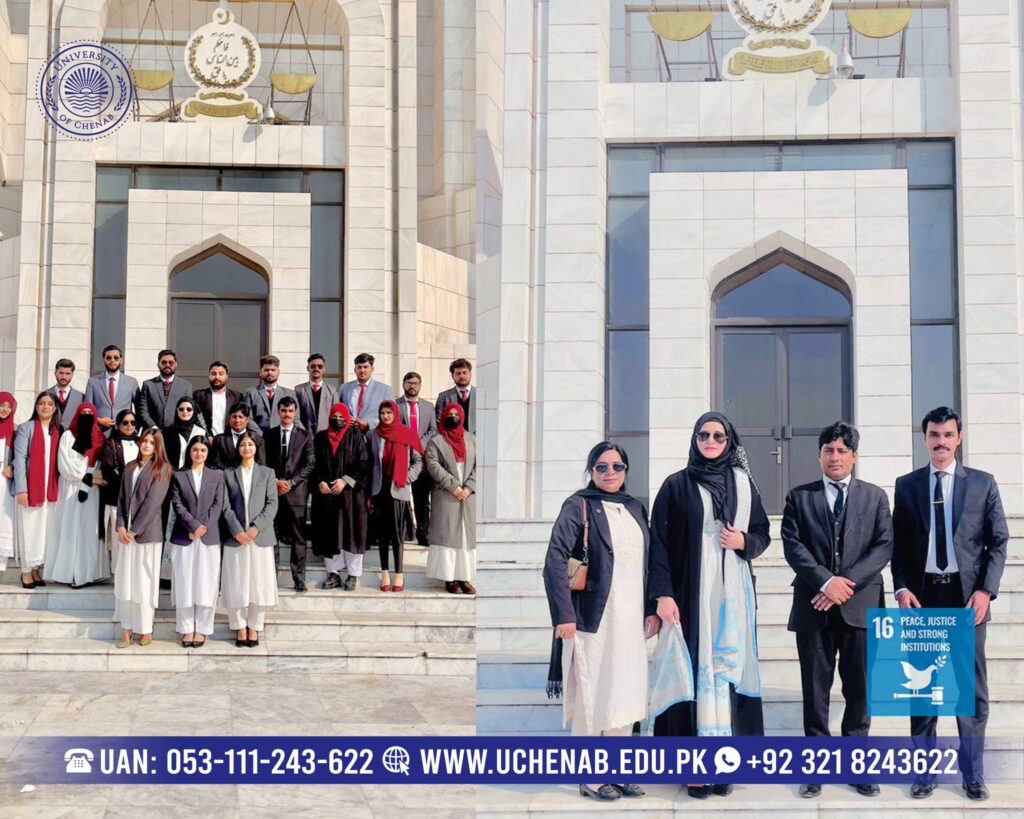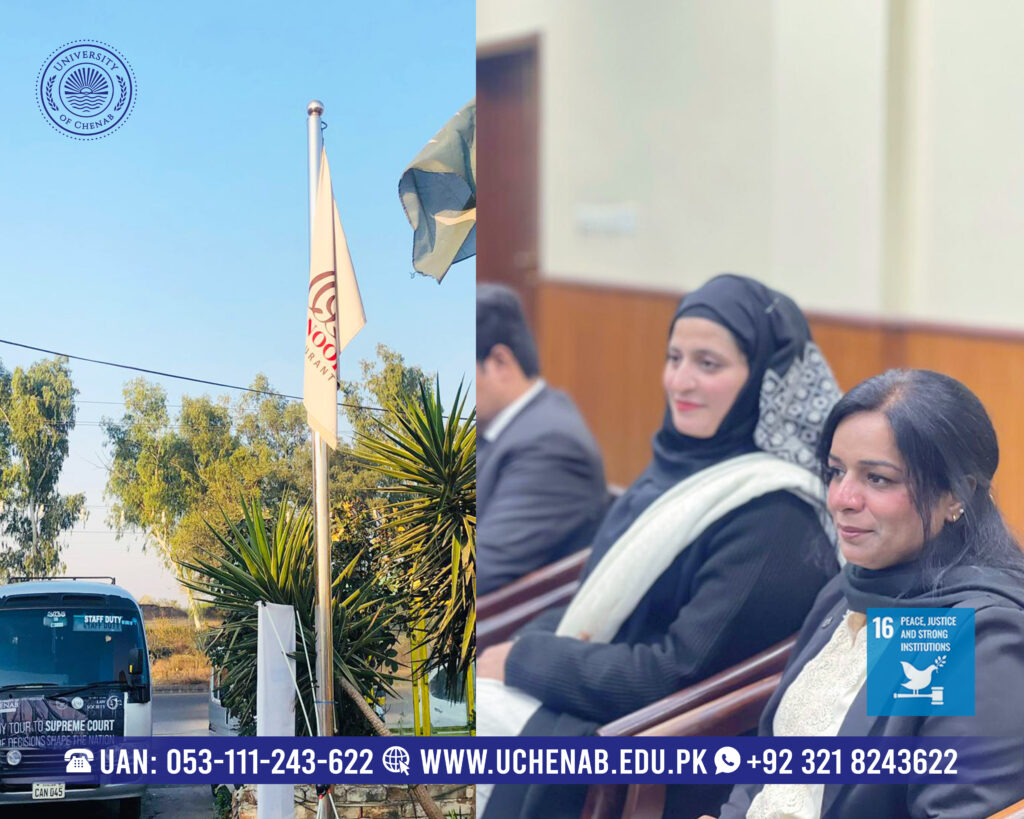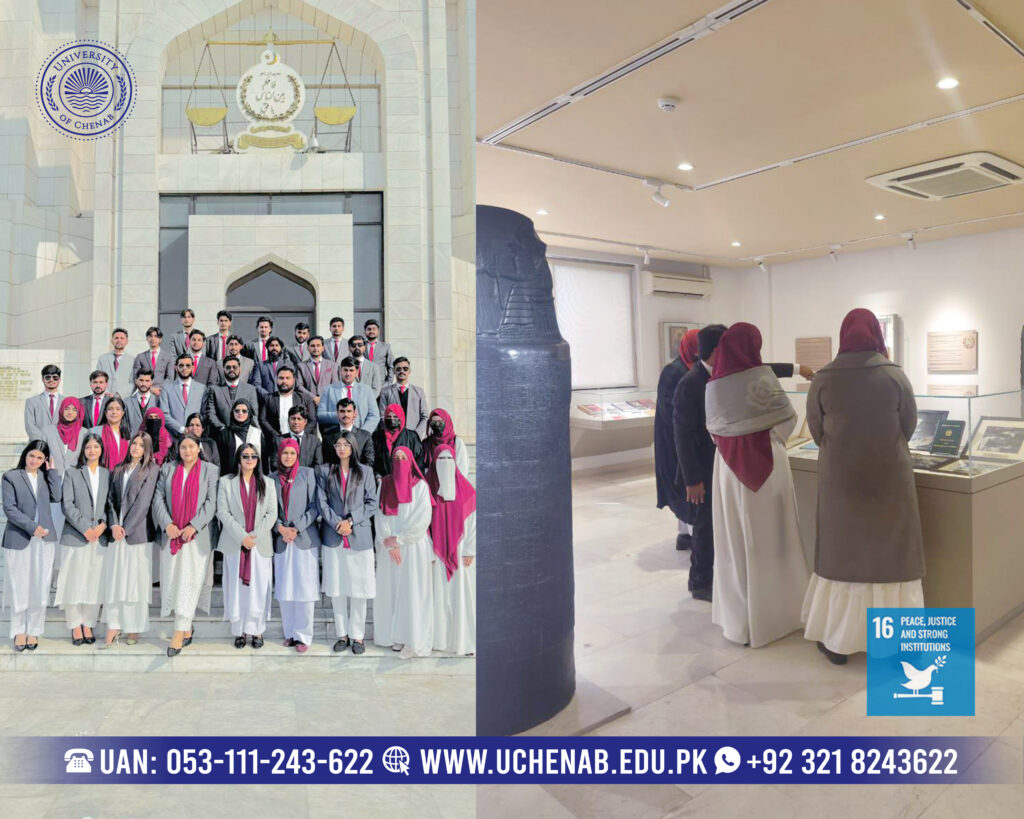
The University of Chenab organized a Supreme Court Study Tour for law students through the Quaid-e-Azam Law Society. This academic visit aimed to connect classroom learning with real judicial practice. Moreover, the tour provided students direct exposure to Pakistan’s highest constitutional forum. The visit began with an organized entry into the Supreme Court premises under faculty supervision. Initially, students received guidance regarding courtroom discipline and judicial decorum. Subsequently, participants observed live court proceedings with focused academic interest. Consequently, learners witnessed structured legal arguments and constitutional interpretations in practice.
Throughout the visit, faculty members guided students and clarified complex judicial procedures. Furthermore, mentors explained courtroom roles, judicial hierarchy, and constitutional responsibilities. Their guidance strengthened understanding of legal ethics and professional conduct. As a result, students developed clearer perspectives on judicial independence and governance. An engaging observational experience allowed students to analyze real-time legal decision-making. Additionally, participants discussed constitutional references and procedural accuracy among peers. Meanwhile, the environment encouraged curiosity and reinforced analytical thinking. Each observation deepened respect for the justice system.
Following the proceedings, students reflected on constitutional law and judicial structures. Moreover, discussions highlighted how courts protect fundamental rights and democratic values. This exposure strengthened academic confidence and motivated students toward professional excellence. Consequently, learners recognized the importance of integrity within legal practice. Through initiatives like this, The University of Chenab continues promoting experiential legal education. The Supreme Court Study Tour enhanced academic insight and professional awareness among students. Ultimately, such exposure prepares future lawyers for responsible roles within the justice system and society.