
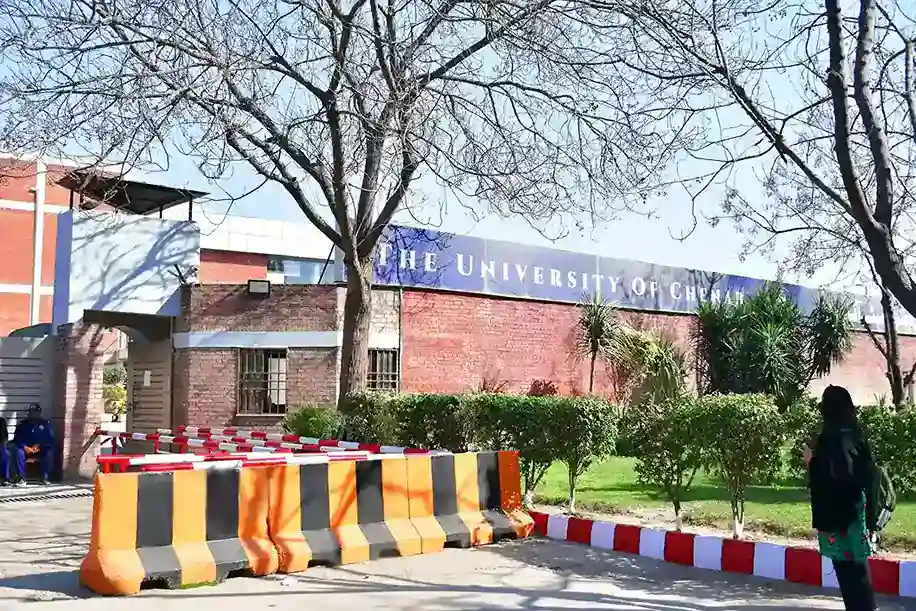
Civil engineering is one of the oldest and most impactful engineering disciplines, shaping the infrastructure that supports modern life. Civil engineers play a key role in the development of roads and bridges, water systems, and smart cities. Students who are planning to pursue this profession should have a complete understanding of the major fields of civil engineering. University of Chenab is a well-known institution in offering excellent educational services to build a powerful career ahead. The best fields of civil engineering explained below highlight the importance of this field today and in future.
Top Fields of Civil Engineering Explained in 2026
Structural Engineering
Structural engineering is one of the most significant branches of civil engineering. This field is about the design and analysis of buildings, bridges as well as other facilities. Their demand will increase in 2026 because of the expansion of urban areas and smart cities. The engineers should be able to use superior materials and contemporary design technologies with the aim of guaranteeing safety, strength, and sustainability.
Transportation Engineering
Transportation engineering is all about the planning, designing and management of transport systems, including roads, highways, railways as well as airports. As population and transportation congestion in cities grow, the need for transportation engineers equally grows. In 2026, it focuses on smart traffic, sustainable mobility and effective public transport solutions to enhance connectivity and minimize environmental impact.
Environmental Engineering
Environmental engineering focuses on environmental safety by involving different measures to contain pollution, waste management as well as even water treatment. This field will be important in 2026 as the issue of climate change continues to increase in the world. The engineers are utilizing sustainable practices, renewable resources, and green infrastructure development to make the environment healthier and safer.
Geotechnical Engineering
Geotechnical engineering is the study of the behavior of soil and rock in order to design safe foundations of structures. Hence, it is essential in construction activities such as dams, tunnels, and buildings. This area is evolving in 2026, with new testing technologies and data analysis procedures to guarantee stability, minimizing risks, and large-scale infrastructure development.
Construction Management
Construction management deals with the planning, coordination and control of construction projects until completion. It is an amalgamation of technical knowledge, leadership as well as organizational skills. This field uses modern project management software and Building Information Modeling (BIM) to change the way projects are complete upon within budget and time constraints.
Different Skills a Student Learns in a Civil Engineering Degree
After discussing best fields of civil engineering explained above, let’s talk about what skills a student can collect from it. A degree of BS Civil engineering in Gujrat will enable the students to acquire an extensive set of technical as well as practical competencies in the construction and infrastructure sector. The students get the learning about the problem-solving skills, critical thinking, and analytical skills to solve intricate engineering problems. They are also familiar with design software, surveying techniques and building materials.
Hence, teamwork skills and communication skills are also part of their learning since engineers usually operate in a teaming environment. Also, students acquire project management skills, time management and attention to detail, all of which are essential to successful project implementation and safety and quality standards.
Reasons to Apply to the University of Chenab for Civil Engineering
Excellent Learning and Contemporary Curriculum
The university has a manageable civil engineering course that is aimed at addressing the current industry requirements. Its curriculum is constantly on changing terms to accommodate the recent technologies and practices. Above all, students are not only getting theoretical training but also exposure, so that upon graduation, they are ready to take on real-life engineering challenges successfully.
Qualified Faculty and Leadership
The advantages of having professional faculty members ensure that students have good academic support as well as mentorship. The instructional model is aiming at the clarity of concepts and practical knowledge. Students are also getting support by faculty members in research projects and professional development so that they can gain confidence and competence in their careers as engineers.
Higher Labs and Work Experience
The university has up-to-date laboratories as well as facilities, where students are allowed to conduct experiments and have hands-on experience. There is a focus on practical learning to ensure that there is no gap between theory and practice. This exposure enables students to understand the methods of construction, material testing and engineering analysis in a real-life situation.
Industry and Career Opportunities
The university has links with industry professionals and organizations and provides an opportunity to have an internship as well as job placements. All these connections enable students to acquire the practical world before they graduate. Career counseling and support services also help the students to secure jobs, and therefore, it is a good option for those who are seeking careers in civil engineering.
FAQs: Common Questions People Often Ask
- Is being a civil engineer a good career in Pakistan?
Yes, civil engineering can be a good career choice in Pakistan because of the ongoing development of infrastructure in the country and the growing need of professional engineers in the country.
- What kind of skills does a civil engineering student learn?
Successful careers require students to be analytical, solve problems, communicate, know the technical aspects and use engineering software tools.
- Does the University of Chenab have practicable training?
Yes, the University of Chenab focuses on practical learning by using labs, internships and industry exposure to equip students with the reality of the engineering problem.
- Are civil engineers recognized overseas?
Civil engineers can practice anywhere around the world and in areas that have a high construction rate. They are paid better salaries and have the chance to broaden their professional experience.
Build Your Future with Excellence at the University of Chenab
The University of Chenab is a place to step into a world of innovation, opportunity, and professional success. Our Civil Engineering course will prepare you with the latest knowledge, skills and exposure to the industry that will be appreciated by employers. Study with knowledgeable faculty, acquire practical experience, and prepare to have satisfying international career.