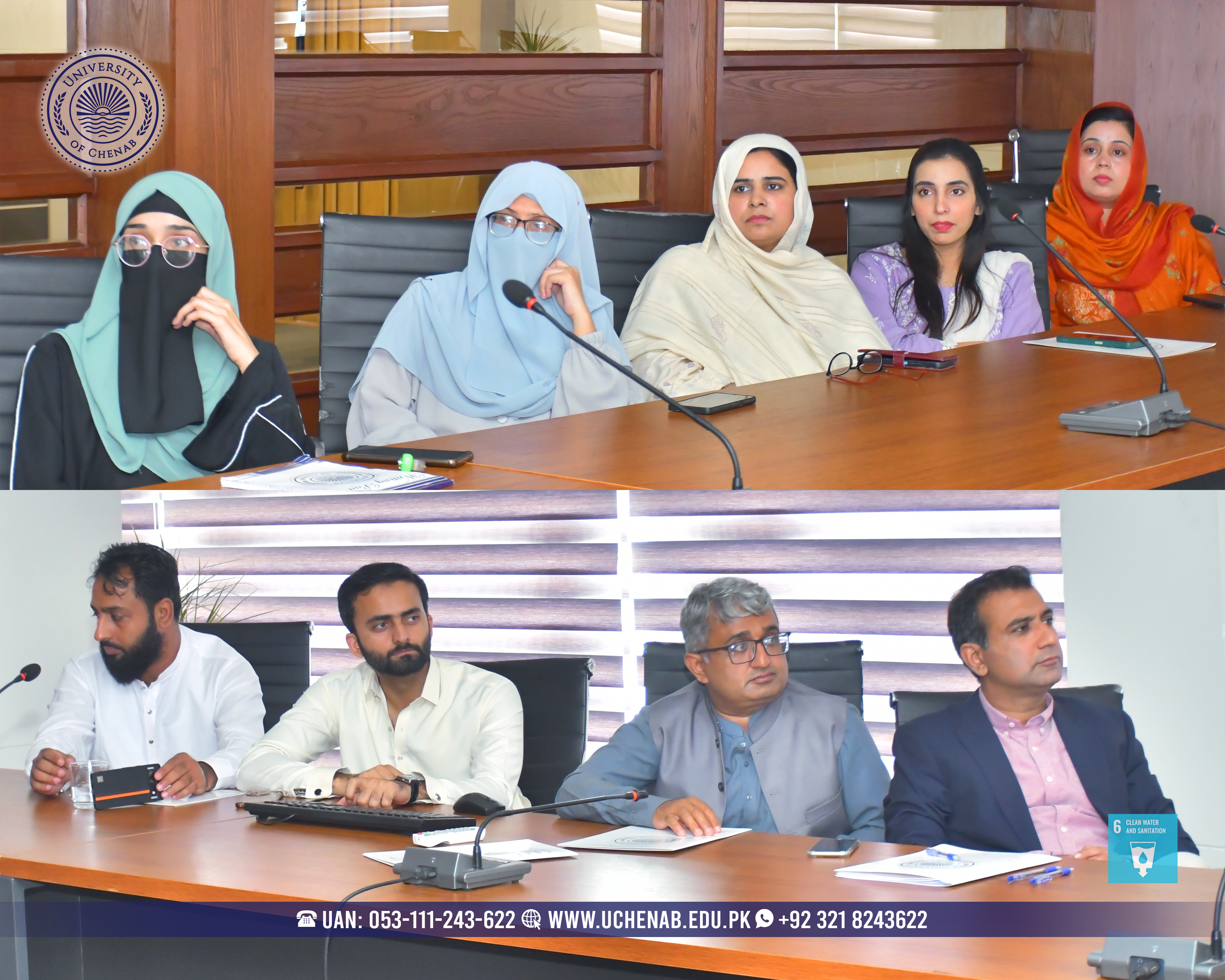
The University of Chenab’s Department of Food Science & Technology conducted the MPhil Final Viva Voce defence, marking a significant academic milestone for postgraduate scholars. The session highlighted research excellence, critical analysis, and scholarly achievement. Moreover, the proceedings reflected UChenab’s commitment to advancing postgraduate education and strengthening its research culture. During the defence, MPhil scholars presented their research findings before the evaluation panel. Their presentations demonstrated academic engagement, systematic investigation, and a commitment to scientific inquiry. Furthermore, the viva voce provided an opportunity for scholars to explain their methodologies, discuss findings, and respond to academic questions.
The proceedings also featured the presence of Dr. Adnan Nasir, Chairperson of the Department of Allied Health Sciences. His participation underscored the university’s emphasis on academic collaboration and research advancement. In addition, the event highlighted the importance of rigorous evaluation in maintaining postgraduate research standards. Through their presentations and discussions, scholars demonstrated critical thinking and analytical abilities. The evaluation process encouraged intellectual engagement while supporting the development of research competencies. Consequently, the defence represented an important step in the scholars’ academic journeys and their continued pursuit of knowledge.
This academic milestone reflects the Department of Food Science & Technology’s dedication to fostering a strong research environment. The department continues to encourage scholarly inquiry, innovation, and academic integrity among postgraduate students. Meanwhile, such activities contribute to the development of knowledge and professional expertise within the discipline. Through the MPhil Final Viva Voce, The University of Chenab reinforces its commitment to research quality and academic excellence. UChenab continues to promote advanced learning, critical scholarship, and intellectual growth. These efforts support the university’s vision of nurturing capable researchers who can contribute meaningfully to scientific advancement and society.