
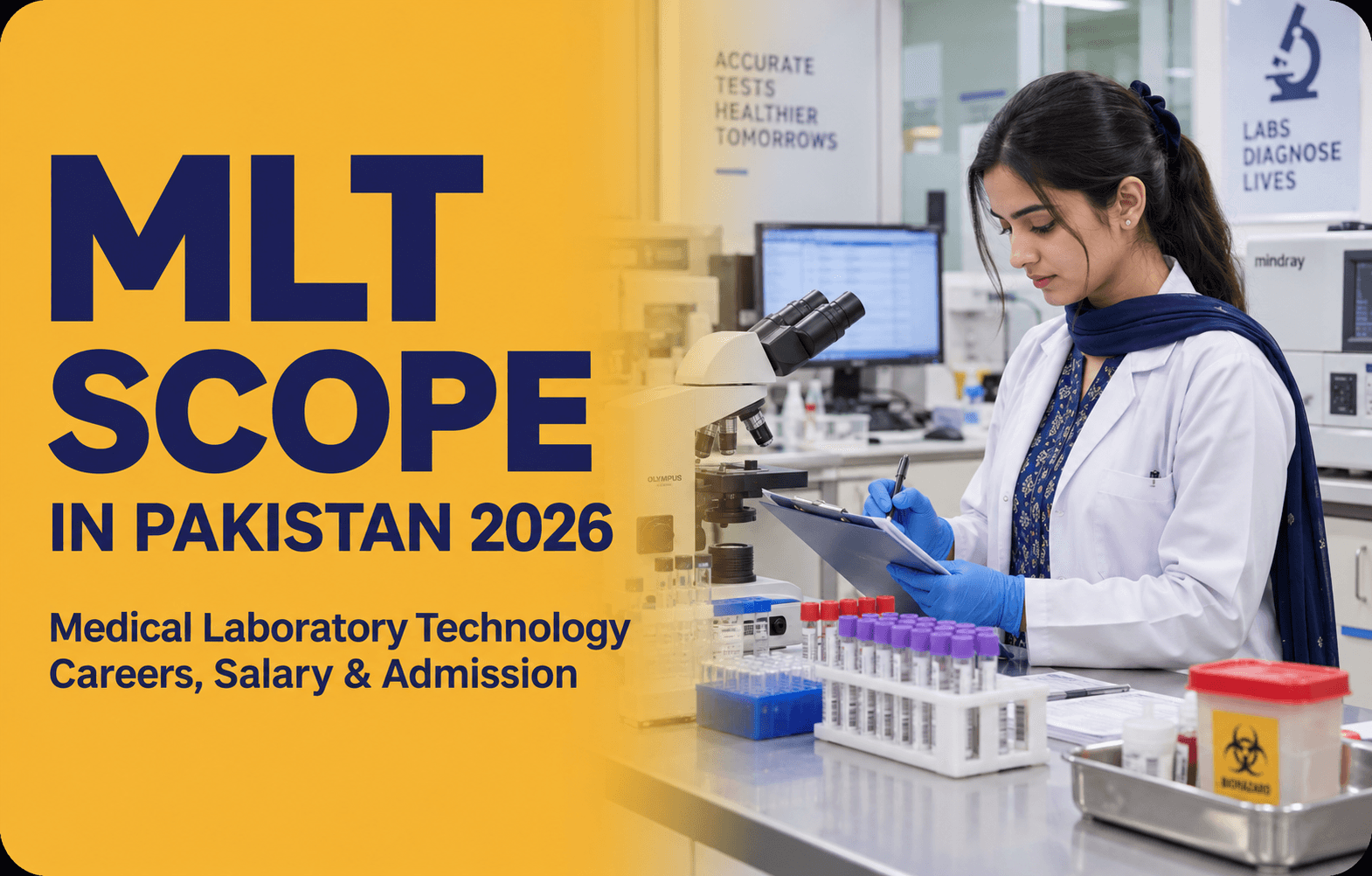
MLT scope in Pakistan includes work in hospital laboratories, diagnostic centers, and research settings, with opportunities to specialize as experience develops. Medical Laboratory Technology brings biological science into clinical practice: laboratory professionals examine samples and produce information that helps healthcare teams understand a patient’s condition.
For students considering BS MLT, the decision begins with an interest in laboratory science and a willingness to work carefully. The degree requires attention to detail, respect for procedures, and an understanding of how laboratory findings contribute to patient care. This guide discusses career directions, practical preparation, salary considerations, and admission to the University of Chenab.
What is Medical Laboratory Technology?
Medical Laboratory Technology is the study and practice of laboratory testing used in healthcare. The work involves biological specimens, testing instruments, and the records that accompany each stage of an examination. Reliable results depend on how well these stages are performed.
Laboratory professionals may prepare samples, operate equipment, carry out quality checks, and record findings. The US Bureau of Labor Statistics’ occupational guide describes these general responsibilities. In Pakistan, the duties assigned to a graduate depend on the position, the laboratory, and the employer’s qualification requirements.
Students considering this field should be comfortable with methodical work. A procedure may be repeated many times, but each sample still requires the same care. An interest in the result must be matched by an interest in how that result was obtained.
Where can MLT graduates work in Pakistan?
Hospital and diagnostic laboratories are relevant career settings for MLT graduates. Other directions include research support and, with suitable experience or further qualifications, laboratory quality work and teaching. These paths differ in their entry requirements and everyday responsibilities.
| Career direction | Nature of the work | Preparation to consider |
|---|---|---|
| Hospital laboratory | Laboratory services supporting clinical departments and patient care. | Relevant practical training and the ability to work within departmental procedures. |
| Diagnostic laboratory | Sample testing and associated laboratory documentation. | Familiarity with the methods and equipment specified in the role. |
| Specialist laboratory work | Work concentrated in a particular laboratory discipline. | Further supervised experience or additional training in that area. |
| Laboratory quality | Documentation, quality checks, and review of laboratory processes. | Practical experience and knowledge of the quality system used by the employer. |
| Research and education | Laboratory support for research projects or academic work. | Research skills; teaching and advanced research posts may require postgraduate qualifications. |
At the beginning of a career, a position with appropriate supervision can provide valuable experience. Graduates should consider the work they will learn, the responsibilities they will hold, and the support available to them alongside the job title.
Technologist, technician, and pathologist
These titles should be read carefully when reviewing vacancies. Technologist and technician positions can differ in their educational requirements and the complexity of their duties. A pathologist is a physician, and becoming one requires a different educational route from BS MLT. The BLS occupational description explains the broad distinctions; local job advertisements establish the requirements for a particular Pakistani post.
What should students know about MLT salaries?
A useful salary comparison starts with comparable jobs. An entry-level trainee and an experienced technologist have different responsibilities, so combining their pay into one figure gives students little guidance. Employer, location, working hours, and relevant experience also affect the value of an offer.
When assessing a vacancy, consider the following details together:
- Pay: the basic salary, allowances, and any conditions attached to them.
- Working arrangements: shift patterns, weekly hours, and travel costs.
- Employment terms: whether the position is permanent, contractual, or a training appointment.
- Professional development: the supervision and training available during employment.
The Government of Pakistan’s National Jobs Portal is one place to look for public-sector advertisements. Where an advertisement specifies a pay scale rather than a salary amount, read the associated employment terms before making a comparison.
For families planning education expenses, the degree budget should remain manageable without relying on a promised starting salary. Include tuition, transport or accommodation, and any additional study or training charges.
Practical training and professional preparation
Theory provides the scientific basis for laboratory work. Supervised practice helps students apply that knowledge consistently and recognize when they need guidance. Both deserve attention when choosing a degree.
A useful distinction is the difference between observing a procedure and performing it under supervision. Watching a demonstration introduces a method; supervised practice allows a student to develop skill and receive feedback. Assessment establishes whether the student can meet the expected standard.
Prospective students can discuss practical teaching with the department by asking where training takes place, how students are supervised, and how competence is assessed. During the degree, a record of completed training and assessed skills can help students describe their preparation accurately in applications and interviews.
Professional habits matter as well. Clear records make work easier to review. Responding thoughtfully to feedback helps correct mistakes. Asking for assistance when a procedure is unfamiliar is part of responsible practice.
Studying BS MLT at the University of Chenab
Our BS Medical Laboratory Technology program information introduces areas including biochemistry, hematology, microbiology, blood banking, and molecular biology. Research methodology and statistics also appear in the program overview, reflecting the relationship between laboratory practice and scientific investigation.
Students considering UChenab can use the program page to begin reviewing the course and bring questions about practical teaching and the current study plan to our admissions team. A discussion with the department is particularly useful for students who already have an interest in a specific laboratory discipline.
Admission requirements
Our published eligibility criteria specify FSc pre-medical or an equivalent qualification with at least 50% marks. The UChenab entry test is mandatory. Applicants should follow the official application guide for the application process and current instructions.
Before submitting an application, review the fee schedule and supporting-document requirements. Information about merit-based scholarships is available for students assessing financial support.
Is MLT the right choice for you?
MLT may suit students who enjoy biology and prefer practical work that calls for concentration and precision. Interest in healthcare is a starting point; an interest in laboratory methods makes the choice more specific.
Speaking with a practicing laboratory professional can help make the work easier to picture. Ask about an ordinary shift, the tasks assigned to new graduates, and the parts of the work that take time to learn. These conversations are more useful than a general assurance that a degree has “good scope.”
Students comparing allied health courses can consult our undergraduate program listing. Consider the kind of work each course prepares students to perform, the practical education involved, and the subjects you would be willing to study in depth.
Further study and overseas career planning
Postgraduate study can help graduates develop a more focused academic or research interest. Course selection should follow that interest: the entry requirements, research opportunities, and intended career direction should fit together. Some programs require particular undergraduate subjects or research preparation.
For overseas employment, planning begins with the destination and the occupation. Qualification assessment, professional registration, and immigration are separate processes. Requirements should be obtained from the relevant official authorities before paying for an assessment or an intermediary’s services.
Graduates can prepare by retaining transcripts, course outlines, and records of supervised training. These documents help an institution or assessment body understand the content of their education.
Frequently asked questions
Can a BS MLT graduate become a medical doctor?
BS MLT is a laboratory science qualification. It does not qualify a graduate as a physician. Students who want to practice as doctors must follow the required medical education and licensing route.
Can new graduates apply for specialist laboratory roles?
Some roles include training, while others require prior experience with particular methods or instruments. New graduates should use the position’s stated qualifications and experience requirements to assess their suitability.
Does a higher salary always mean a better first job?
Salary is one part of the decision. Supervision, working hours, travel expenses, and opportunities to develop practical skills also affect the value of a first position.
What should applicants discuss with the MLT department?
Ask about the approved study plan for your intake, practical sessions, supervised training, and assessment. Bring any questions about your previous qualification so the admissions team can advise on eligibility.
Apply for BS MLT at UChenab
If laboratory science matches your interests, review our BS Medical Laboratory Technology program and discuss your study plans with our admissions team. When you are ready to apply, follow the UChenab application guide for the next steps.