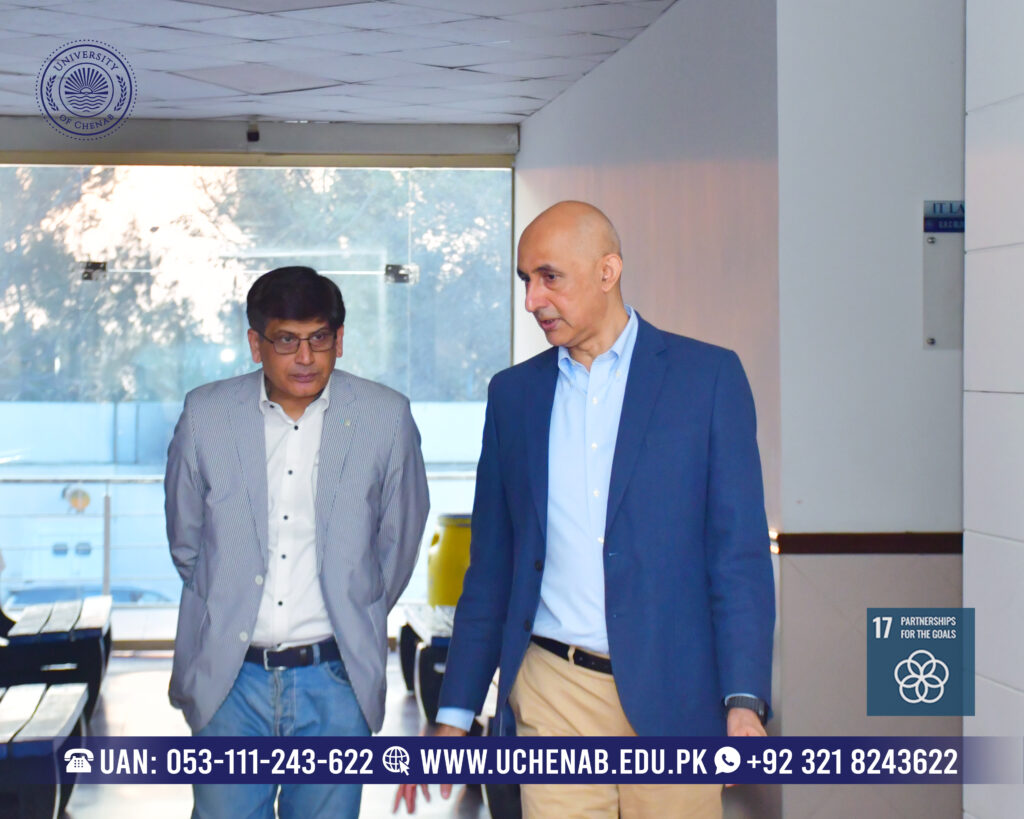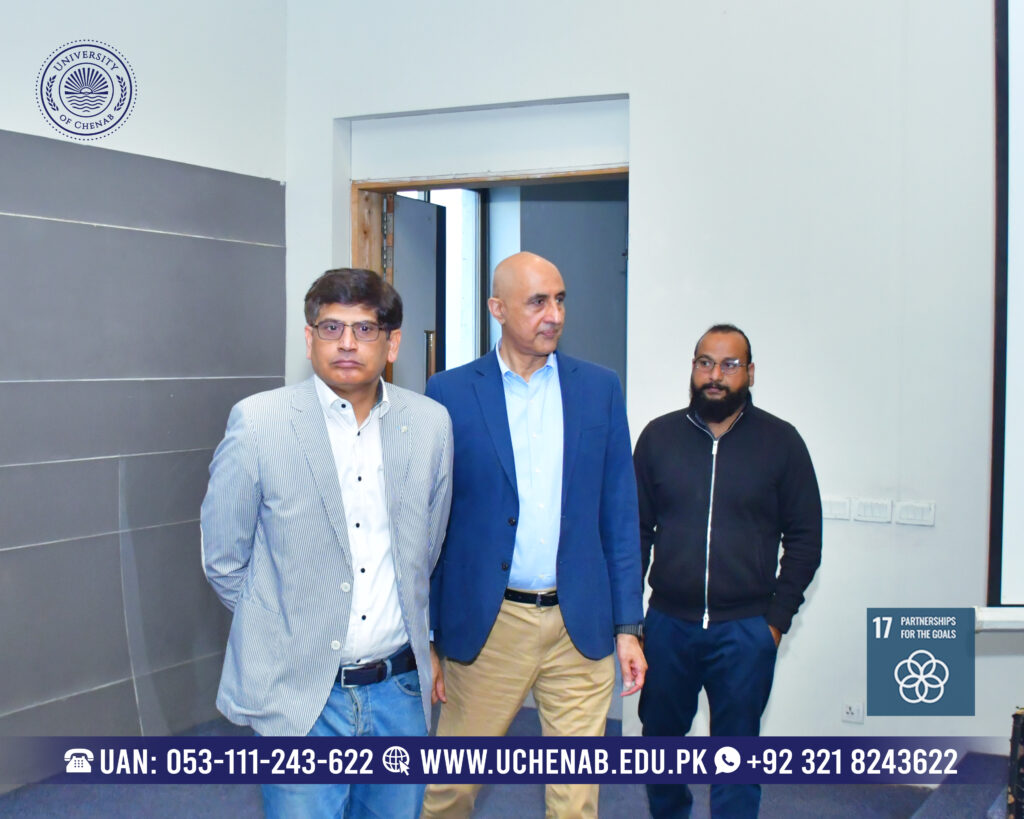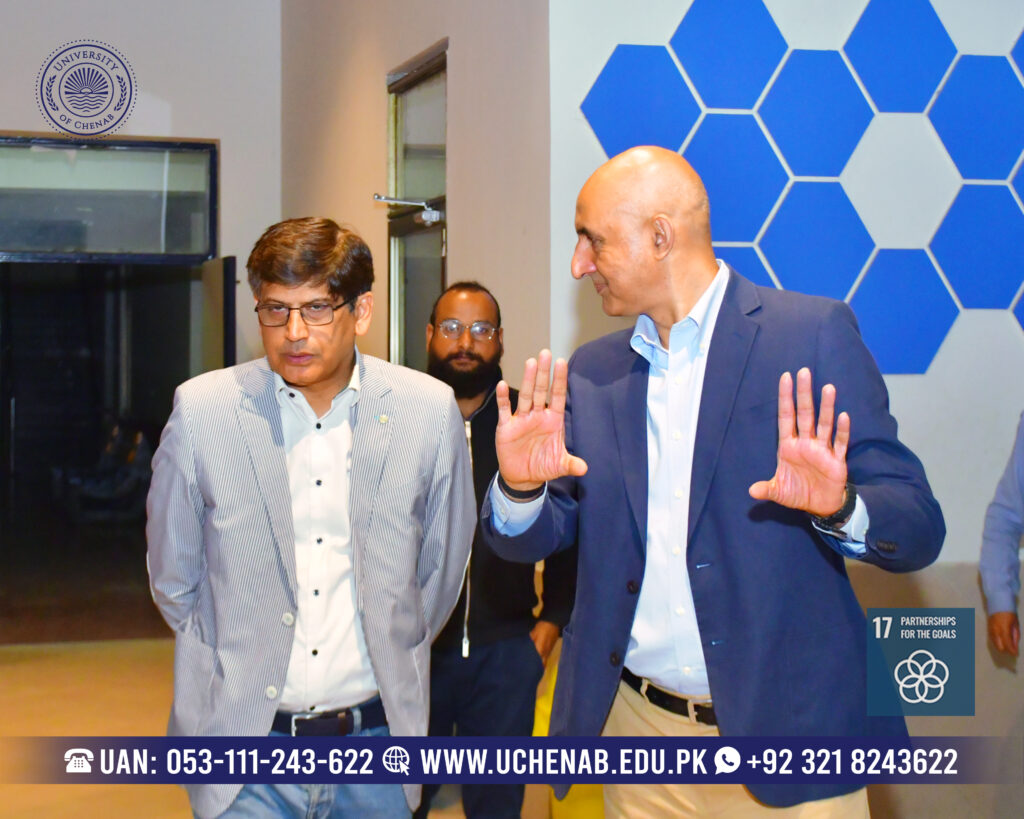
The University of Chenab proudly hosted a significant institutional engagement under HED Punjab, marking an important milestone in academic collaboration and governmental liaison. The visit of the Secretary, Higher Education Department Punjab, reflected growing confidence in UChenab’s academic systems, governance model, and educational contributions. During the visit, the honourable dignitary received a warm welcome from the worthy Deputy Chairman, Board of Governors, Mr. Naveed Akbar. Subsequently, the delegation toured multiple academic departments, administrative units, and student facilities. The comprehensive walkthrough offered a close view of the University’s academic environment, operational structure, and learning resources. Moreover, detailed briefings highlighted ongoing initiatives, institutional achievements, and strategic development plans.
Throughout the interaction, the Secretary observed classroom settings, laboratories, and student engagement spaces. He appreciated the University’s modern infrastructure, disciplined academic culture, and progressive educational vision. Furthermore, he acknowledged UChenab’s commitment to maintaining high standards in teaching quality, research orientation, and institutional governance. In addition, discussions focused on higher education challenges, policy alignment, and future collaboration opportunities. The dialogue encouraged knowledge exchange and strengthened mutual understanding between institutional leadership and provincial education authorities. Consequently, the visit reinforced trust in UChenab’s role as a contributor to regional academic advancement.
The distinguished guest commended the University’s visionary leadership and structured academic framework. He recognized its expanding role in strengthening the higher education landscape across Punjab. Such institutional engagements continue to elevate UChenab’s national standing. Through visits like this, The University of Chenab advances educational excellence, innovation, and academic leadership. The engagement reaffirmed a shared commitment to quality education, institutional growth, and future-ready learning ecosystems.