
What Is the Difference Between MLT and Radiography?
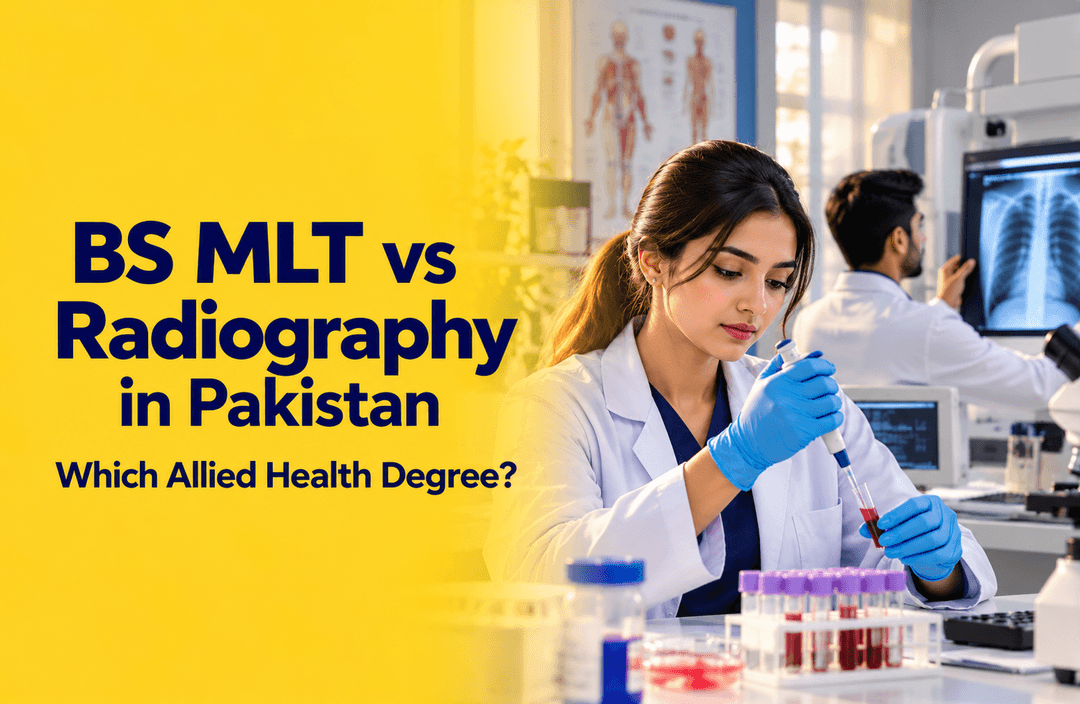
MLT analyzes biological specimens; radiography creates diagnostic images of structures inside the body. A medical team may need both kinds of evidence for a patient. They are complementary professions, but their training and professional responsibilities are not interchangeable.
The University of Chenab’s Medical Laboratory Technology page describes work related to laboratory testing of blood, urine and other specimens. Its Radiography and Imaging Technology page describes medical imaging, radiation safety and image processing. Both programs sit within the allied health education landscape, although their techniques differ markedly.
| Comparison | BS Medical Laboratory Technology | BS Radiography and Imaging Technology |
|---|---|---|
| Primary material | Blood, urine, tissue or other collected samples | Medical images acquired using imaging equipment |
| Typical setting | Diagnostic laboratory and pathology-related services | Hospital or diagnostic imaging department |
| Technical focus | Microbiology, hematology, clinical chemistry, sample quality | Imaging anatomy, patient positioning, radiographic methods, safety |
| Patient contact | Varies with specimen collection and laboratory role | Frequently involved in positioning and preparing patients |
| Quality concerns | Specimen identity, contamination, calibration, result validity | Image quality, correct procedure, radiation protection |
Explore your options: use UChenab’s official degree finder and eligibility information to check the academic route that interests you.
Before applying, examine the published undergraduate program list and ask which supervised practical experiences are available for the selected intake.
What Do Medical Laboratory Technology Students Learn?
Medical laboratory education teaches students to generate dependable test results from biological material. Students need to understand how errors can arise before, during and after analysis. For example, a wrongly labeled sample can undermine a result regardless of the quality of the testing machine.
Core scientific concepts commonly include physiology, microbiology, hematology, biochemical analysis, laboratory procedures and safe handling of specimens. Students learn why reference ranges, controls and proper documentation matter. Laboratory science is not simply operating machines; it requires careful judgment about specimen quality and testing limitations.
Is MLT a patient-care field?
MLT is part of healthcare because laboratory findings inform clinical decisions. Contact with patients varies by assignment and institution. Some work involves sample collection; other work takes place largely within laboratory sections. A graduate’s permitted professional activities follow applicable training, licensing and workplace rules.
What Do Radiography Students Learn?
Radiography combines human anatomy, imaging technology and patient safety to support diagnostic imaging. Students encounter radiographic techniques and the reasoning needed to position patients, follow protocols and evaluate whether an image is technically adequate.
Radiation protection is a serious professional responsibility wherever ionizing radiation is used. Students should understand exposure principles, equipment checks, patient identification and the importance of following trained supervision. More specialized imaging methods may require further instruction and workplace credentialing; an undergraduate title alone does not establish permission to perform every procedure.
Is a radiographer the same as a radiologist?
No. Radiography and radiology involve distinct professional qualifications and responsibilities. Radiographers or imaging technologists are trained to acquire images within their professional scope. Radiologists are medical doctors with specialist imaging training who interpret imaging findings and provide medical opinions. Students should not confuse degree titles with medical-doctor licensing.
A Practical Illustration: One Patient, Two Forms of Evidence
Laboratory tests and imaging answer different clinical questions. Suppose a clinician orders blood analysis and a chest image for a patient. The laboratory team handles sample integrity, performs validated tests and reports results through approved processes. The imaging team follows an imaging request, prepares the patient and produces technically appropriate images.
This is an educational illustration, not a description of treatment for a real patient. Both teams work as part of a wider healthcare system; diagnosis and management decisions belong to appropriately licensed clinicians.
Which Degree Should You Choose?
Choose by the kind of scientific evidence you want to work with every day. Consider these questions before deciding:
- Do you enjoy observing chemical and biological reactions, handling specimens and checking measurement quality? Explore BS MLT.
- Do you prefer anatomy, image formation, technology and patient positioning? Explore Radiography and Imaging Technology.
- Are you comfortable with procedural rules, accurate documentation and supervised clinical work? Both fields require them.
Review the approved teaching plan, clinical placement arrangements and professional recognition requirements for the precise qualification. Compare opportunities for supervised hands-on training, not only publicity photographs of a laboratory.
Study Options at the University of Chenab
Admission planning starts with verified qualification names, eligibility and practical requirements. Read the current university eligibility information and each department’s program description. Confirm the current official duration directly with Admissions rather than relying on a comparison written without access to the latest approved study plan.
When you have chosen your preferred field, follow UChenab’s application instructions. The university is based in Gujrat, Punjab, and the degree finder helps students locate relevant programs.
Frequently asked questions
Is MLT the same as Radiography?
No. MLT works primarily with clinical specimens and laboratory analysis, whereas radiography concentrates on medical image acquisition and relevant patient safety. Their scientific foundations overlap in anatomy and healthcare practice, but daily procedures and technical responsibilities differ. Neither degree should be used as a substitute for the other professional qualification.
Does MLT involve X-rays or CT scans?
X-rays and CT scans are imaging procedures rather than the central work of a medical laboratory technologist. MLT programs primarily train students in sample testing and laboratory science. Imaging specialists receive different equipment and safety training. The exact workplace responsibilities are determined by professional rules and employer protocols.
Is Radiography the same as becoming a radiologist?
No. A radiologist is a medically qualified doctor with specialist radiology training. Radiography and imaging technology degrees prepare students for technical roles in image acquisition and related clinical procedures. These are distinct education pathways, and neither a radiography bachelor degree nor an MLT degree makes someone a radiologist.
Which course involves more direct patient interaction?
Radiography often involves regular patient preparation and positioning for imaging, whereas MLT contact varies by laboratory role and specimen collection duties. Both require communication and patient safety awareness. Practical exposure differs by placement, so candidates should speak with program staff about the current training arrangements.
Can I apply to BS MLT or Radiography after FSc Pre-Medical?
FSc Pre-Medical is a relevant background for allied health study, but admission depends on the institution’s current criteria and documentation requirements. Students should consult the specific UChenab program page and its eligibility policy before assuming that a particular percentage or test requirement applies.
Next step: Check your admission options
Explore the program directory, review admission eligibility and follow the official application instructions when you have selected a suitable course. Current availability, fees and dates are determined by the relevant intake.