
What Is the Difference Between Optometry and Radiography?
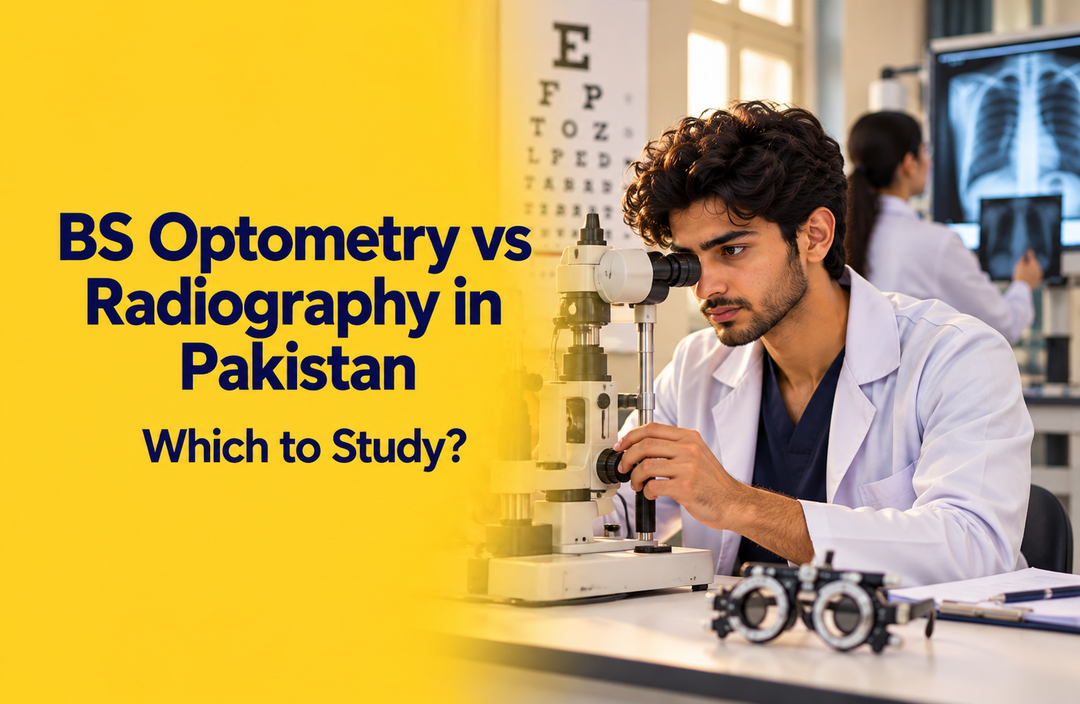
Optometry studies eye health and visual function, whereas radiography studies diagnostic image production. Both contribute important information within health services. A person may visit an optometry service for a vision assessment, while a radiography department produces imaging requested to investigate internal anatomical structures.
UChenab’s Optometry and Vision Sciences department describes ocular anatomy, optics, refraction, binocular vision and patient-centred assessment. Its Radiography and Imaging Technology program describes imaging techniques, medical imaging principles, image processing and radiation safety.
| Feature | Optometry | Radiography |
|---|---|---|
| What is assessed? | Visual function, refractive issues and eye-related findings | Images of internal anatomical structures |
| Science emphasis | Optics, ocular anatomy, visual sciences | Imaging physics, anatomy, imaging systems |
| Practical tools | Vision testing and optometric assessment equipment | Imaging equipment and image-processing workflows |
| Safety focus | Appropriate examination, hygiene and referral | Procedure quality and radiation protection where relevant |
| Study preference | Eye care and visual assessment | Imaging technology and diagnostic procedures |
Explore your options: use UChenab’s official degree finder and eligibility information to check the academic route that interests you.
What Do Students Learn in BS Optometry?
Optometry combines the science of light and vision with clinical assessment skills. Students study how the eye forms an image, how focusing errors influence sight, and how visual functions are assessed. Refraction and binocular-vision principles are particularly important because they connect physics with patient observations.
A student may learn why a person’s reported blur is not enough, by itself, to specify an appropriate correction. Assessment involves measurement, interpretation and recognizing when a finding needs specialist referral. Professional decisions belong within the training and regulatory scope of the practitioner.
Optometry is not equivalent to medical ophthalmology. Ophthalmologists are medically trained eye specialists; optometry follows a distinct academic and professional route.
What Do Radiography Students Learn?
Radiography education combines anatomy, imaging physics and controlled technical procedures. Students learn why image quality depends on patient preparation, appropriate positioning, equipment operation and careful checking. Where imaging uses ionizing radiation, protection principles and correct protocols are essential.
Imaging modalities are not all identical. Some methods use ionizing radiation; others use different physical principles. A student should not assume every imaging technique is covered to specialist-practice level in an undergraduate course. Supervised practical arrangements and later training are important questions for the department.
What Is Everyday Study Like in These Fields?
Practical tasks reveal the distinction more clearly than a degree title. In an illustrative teaching exercise, an optometry student might conduct and document a structured visual assessment. A radiography student might explain a patient-positioning protocol, its image-quality checks and the relevant safety precautions. Both must communicate with people, use accurate terminology and record findings carefully.
Those are general examples of learning activities, not representations of particular UChenab classes. Students should review the program’s current course and clinical-training documentation.
Which Allied Health Degree Fits You Better?
Your preferred clinical problem should guide the decision. If the eye, vision, optical measurements and careful examination interest you, begin with BS Optometry and Vision Sciences. If anatomy, equipment and image production appeal more, investigate Radiography and Imaging Technology.
- Ask about the precise approved qualification and current curriculum.
- Find out what practical and clinical supervision students receive.
- Check entry requirements and program-specific recognition.
- Evaluate the entire cost of study and the everyday work involved.
Do not choose simply because one title sounds more technical or because an online post quotes an unverified salary.
How to Apply at the University of Chenab
An accurate application starts with the current program listing and eligibility requirements. UChenab’s degree finder provides program navigation, and its eligibility page sets out general admission information. Program-specific rules may be more detailed.
Read the program pages and then check how to submit an application. The admissions team should confirm the current qualification name and intake status before you commit to a course.
Frequently asked questions
Is BS Optometry the same as BS Radiography?
No. Optometry trains students to understand visual function, optics and eye-related assessment. Radiography focuses on medical image production and associated technical and safety procedures. Both are allied health study areas, but their equipment, core clinical questions and professional responsibilities differ significantly.
Do optometrists perform radiography scans?
Routine radiography scans are not the central purpose of an optometry qualification. Optometry concerns eye and vision assessment, using tools appropriate to that profession. Radiography involves separate imaging training. A professional may use particular imaging technologies within their authorized scope, but one qualification should not be assumed to confer another profession’s permissions.
Which degree has more physics?
Physics appears in different forms. Optometry applies optical principles to light and vision. Radiography uses imaging physics to understand how images are produced and equipment is used safely. The amount of mathematics and physics depends on the approved scheme of study, so candidates should inspect the actual modules.
Is an optometrist an eye surgeon?
No. An optometry degree and medical training in ophthalmology lead to different roles. Ophthalmologists are medical doctors with specialist training in eye diseases and surgery. Students considering eye-care careers should learn the differences in education, professional registration and practice scope before choosing their route.
Can I apply after FSc Pre-Medical?
FSc Pre-Medical provides relevant background knowledge for many allied health programs. Applicants must still meet the University of Chenab’s current requirements for the specific degree and intake. Review its eligibility information and ask Admissions about accepted certificates, equivalent qualifications and any program-specific conditions.
Next step: Check your admission options
Explore the program directory, review admission eligibility and follow the official application instructions when you have selected a suitable course. Current availability, fees and dates are determined by the relevant intake.